ISO Certified

IMO CII Compliance in 2026: How Your Turbocharger Directly Affects Your Ship's Rating
- 8.June.2026
- Turbo Power
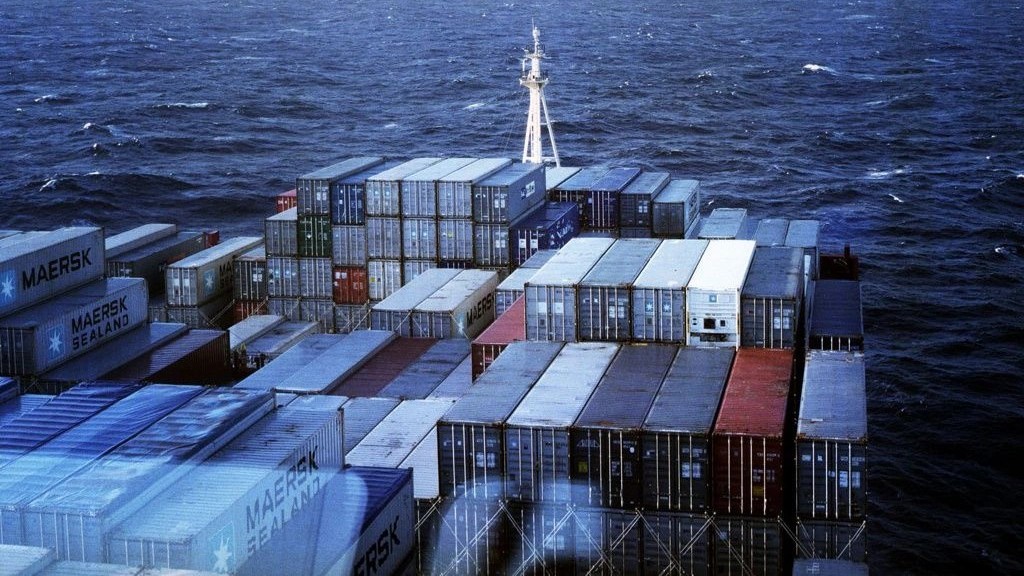
When IMO's Carbon Intensity Indicator came into force in January 2023, many vessel operators treated it as a documentation exercise. By 2026, that thinking has become commercially dangerous. Your ship's CII rating — scored A through E — now influences chartering decisions, financing terms, and port access across major jurisdictions. Clarksons Research has warned that without operational changes, close to a third of the global fleet risks landing in the D or E band. What fewer operators fully appreciate is how directly a single component — the turbocharger — determines where their vessel lands on that scale.
What CII Measures and Why Your Rating Band Matters
CII calculates how much CO? a ship produces per unit of transport work:
CII = Annual CO? Emissions ÷ (Cargo Capacity × Distance Travelled)
The result, expressed in grams of CO? per deadweight tonne nautical mile, is benchmarked against your ship type's reference line to produce an annual A–E rating
Rating |
Performance Level |
What It Means in 2026 |
| A | Major Superior | Charter premium, green financing access, preferred by ESG operators |
| B | Minor Superior | Strong compliance buffer, charterer confidence, no regulatory pressure |
| C | Moderate — Compliant | Minimum passing grade — increasingly difficult to hold without active management. |
| D | Minor Inferior | Three consecutive D ratings trigger a mandatory SEEMP corrective action plan. |
| E | Inferior | One E rating immediately triggers a mandatory corrective action plan. |
The commercial consequences are now well-established. A and B rated vessels attract charter premiums and preferred financing from Poseidon Principles-aligned lenders. D and E rated vessels face charter rate discounts of 5–15%, exclusion from ESG-screened cargo programmes, and refinancing friction. An E rating has ended charter contracts outright. The threshold also tightens every year. Holding a C in 2026 requires approximately 11% better carbon intensity than the 2019 baseline. A vessel that barely held C in 2024 without any operational changes may already be drifting into D this year
The Direct Link Between Your Turbocharger and Your CII Score
Your turbocharger does not burn fuel — but it directly controls how efficiently your engine does. It compresses intake air into the cylinders at higher pressure than atmospheric air, allowing the engine to extract maximum power from every unit of fuel burned. When it performs correctly, combustion is complete, fuel consumption is minimised, and CO? per tonne-mile is as low as your engine can achieve. When it degrades, the chain breaks at the first link:
Worn or fouled turbocharger ? reduced boost pressure ? incomplete combustion ? higher fuel per nautical mile ? higher CO? per transport work ? lower CII score
The fuel saving between a well-maintained turbocharger and a degraded one is documented at 2–6% across voyages. On a vessel burning 30–50 tonnes per day, that is 300–550 tonnes of fuel annually — enough CO? reduction on many vessel types to move a full rating band.
4 Specific Ways a Failing Turbocharger Hurts Your CII Rating
1. Fouled Turbine Blades and Compressor Wheels
Carbon deposits and salt contamination accumulate on turbine blades and compressor wheels during normal operation, degrading aerodynamic efficiency. The turbocharger moves less air per revolution, starving the engine of combustion oxygen. The engine compensates by burning more fuel to hold the same power output — directly increasing CO? per mile. Regular water washing every 200–250 running hours prevents this. Skipping it is one of the most avoidable causes of CII creep
2. Worn Bearings Causing Boost Pressure Drop
Turbocharger bearings run at 15,000–90,000 RPM. As they wear, rotor clearances open, internal leakage increases, and boost pressure drops at every engine load point. The fuel penalty compounds across every voyage, accumulating over a full year into a meaningful rise in the annual CO? total that directly determines your rating
3. Seal Deterioration and Oil Contamination
When oil seals degrade, oil enters the air charge or exhaust stream — depositing on turbine and compressor surfaces, reducing combustion efficiency, and contributing to particulate and CO? emissions. Beyond the CII impact, oil in the exhaust creates class compliance and port state control risk at the same time
4. Part-Load Underperformance — Where Most Ships Now Operate
With slow steaming standard across bulk, tanker, and container segments, most vessels operate at 20–85% engine load. Turbochargers are optimised for near full-load performance. At part load, a degraded unit underperforms even further — amplifying the fuel penalty in exactly the operating range that makes up the bulk of the annual CII calculation. Part-load retuning of the turbocharger configuration is one of the most cost-effective CII interventions available to operators of existing vessels, and it requires no engine modification.
What Vessel Operators Should Do Now
Step 1: Know your current CII trajectory. Review year-to-date fuel consumption and project your year-end rating now — not at year end. If you are tracking toward D, acting before December is the only option.
Step 2: Audit turbocharger condition. Check running hours against the manufacturer's overhaul interval — typically 8,000–16,000 hours. Look for reduced boost pressure, fouling indicators, bearing noise, or oil seal deterioration. Each is costing CII points on every voyage.
Step 3: Schedule service at your next UAE port call. For vessels calling at Fujairah or Dubai Maritime City, a certified onboard overhaul completes within a single port window. No diversion. No drydocking. The specialist team boards, restores the unit to OEM standards, and issues full service documentation for SEEMP compliance.
Step 4: Document everything. All maintenance, parts replacements, and efficiency interventions must be recorded in the SEEMP and available for class and flag state verification. Good documentation supports your CII narrative and protects you at survey
Frequently Asked Questions
A. How much can turbocharger maintenance realistically improve my CII rating?
A well maintained turbocharger versus a degraded one delivers a documented fuel saving of 2–6% across voyages. For a vessel burning 30–50 tonnes per day, that is 300–550 tonnes annually — which on many vessel types is enough to shift a full CII rating band without any other operational change.
B. Does turbocharger condition affect CII across all ship types?
Yes. Any vessel with a diesel or dual-fuel main engine — bulk carriers, tankers, container ships, offshore support vessels — is affected. The link between turbocharger efficiency and fuel consumption applies across all engine sizes and fuel types.
C. Can a turbocharger overhaul be done without drydocking?
In most cases, yes. An onboard overhaul can be completed by a specialist team during a port call — typically within 8–24 hours depending on unit size and condition. No drydocking or engine removal is required.
D. How often should a marine turbocharger be overhauled?
Most manufacturers recommend a full overhaul every 8,000–16,000 running hours, depending on engine type and operating conditions. Vessels running at high load or in heavy particulate environments may need more frequent inspection.
E. What documentation does a turbocharger overhaul produce for SEEMP compliance?
A professional provider issues a signed service report with before-and-after clearance measurements, parts certificates for every replaced component, and traceability records for all genuine or OEM-equivalent parts used — directly usable as a technical improvement entry in your SEEMP Part III plan.
F. We are already slow steaming — is turbocharger maintenance still relevant?
More so. Slow steaming moves your engine into the part-load range where a degraded turbocharger underperforms the most. Optimising the turbocharger for your actual operating load directly amplifies the efficiency gains from slow steaming. The two strategies reinforce each other.
How Turbo Power Engineering Supports Your CII Compliance
At Turbo Power Engineering, we work with vessel operators across marine, offshore, and power generation sectors to maintain turbochargers at the efficiency level that CII compliance now demands.
Our services directly address every cause of CII degradation covered in this article — full workshop and onboard overhaul restoring boost pressure, clearances, and combustion efficiency to OEM standards; genuine and OEM-equivalent parts for ABB, MAN, Napier, MET, IHI, KBB, and Mitsubishi in local stock at Fujairah and Dubai Maritime City; ex-OEM certified engineers with the diagnostic expertise to identify and correct the specific losses affecting your rating; and full SEEMP-ready documentation for every job.
We operate from Fujairah and Dubai Maritime City with 24/7 emergency availability, and maintain regional offices in Oman, India, and Singapore. Concerned about your vessel's CII trajectory?
Talk to our team. +971 505208053 (24/7) | turbopowereng.com/contact-us
Conclusion
The CII framework has changed the economics of engine maintenance. What was once a cost to defer is now a direct input into your ship's commercial performance, financing terms, and regulatory standing. Your turbocharger sits at the intersection of combustion efficiency and CO? output. A well maintained unit doesn't just protect your engine — it protects your rating. In 2026, with thresholds tightening and commercial penalties sharpening, the operators who act on this connection will be holding A and B ratings while others file corrective action plans. The maintenance window is now. The port call is coming. The rating calculation happens at year end.